
 While I was writing my dissertation, I procrastinated in many ways. One of the most productive in hindsight was reading about the dissertation process. I got many books and read many articles. Not all of them were useful, at least not for my way of doing things (or avoiding doing them …). I read about the staggering number of students that never finish their thesis. I was shocked to realize that the thesis is the only academic endeavor in which you are suddenly thrown out of the support system students receive to succeed. Children have tutors. While you are working through your classes you have other students that support you in studying sessions and labs. You have deadlines for your term papers and exams. And then nothing. You are left with your advisor and a key to the library.
The issue is that the role of the advisor is to ensure that what you write is good. You must impress them. They can be very supportive, of course, and many of us are lucky enough to have very patient and sympathetic advisors, but even then, the psychology of the process is tricky. The proof is that the incidence of depression in dissertation scholars is very high. I will look for the statistics but believe me, it is high. And no wonder. If you are lucky enough to not have to work at the same time, you still have very little contact with other students and your social life is supposed to go to hell because you are, after all, writing a dissertation. You have no intermediate steps or strong deadlines, no team, no positive incentives. You must finish because after that you will have a life, you are promised, but all you can count on to support you in doing it is your level of commitment, your perseverance and the patience and more than a little help from your family and friends.
I think this is also why I never considered an academic life. I heard about the intense pressure to publish to get tenure, the lack of camaraderie among professors, the loneliness of it all. I wonder if it was always like that or if it must be like that. I also wonder what else could be done to help more students finish, even if they may never put a foot in a university for the rest of their lives. Coaches? Dissertation anonymous? Mandatory dissertation workshops? A dissertation whisperer? Guidelines that dispel the myths and sincerely address the potential hurdles? Or will the proverbial St Peter always have to admit PhDs in heaven because it counts as time served in hell?
 Adapting is perhaps one of the most important skills in life. At least it has been for me. I have been thrown into thorny situations, as much as anybody else has I guess, and without adapting skills I could have been seriously broken. Yet, I survived and thrived and at this point I welcome change and challenges. The question is, how did I acquire those skills? Can you learn to adapt without going through hardship? Or, more importantly, how will my daughter be able to face adversity and adapt without going through a somewhat difficult childhood? I hear horror stories about kids that go to college and commit suicide because it is their first experience with rejection and failure. And yet, I would do anything in my power to protect her from any real suffering. How can I not? What would you do?
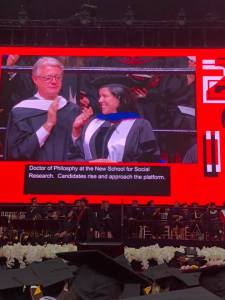 Some time last December a dear friend told me that to finish his dissertation he went away and worked on it far from his usual environment. And that is how I finally finished. I took time off work and spent days at cafes and libraries around the city, without the usual excuses and distractions.
  It is insane to think about studying something else while going through this process. I am afraid I am more than a bit insane… Or I need to unsubscribe from open courses sites. One thing is for sure. Whatever I do in the future, it will never involve a thesis. At this point I remember taking exams, or even writing term papers, almost with pleasure. That is how much I am not enjoying this rite of passage.
 Mariangela Parra